Central Selkirk Caribou Habitat Restoration Project
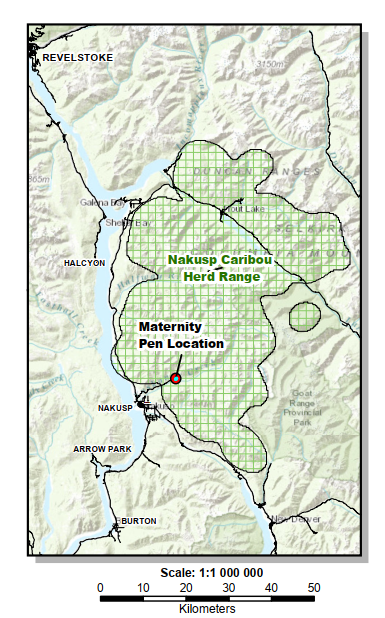
Since 2022, the ALCS, in partnership with the Caribou Recovery Program, has been operating the caribou maternity pen to increase calf recruitment and maintain or increase adult female survival. The maternity pen is a short-term recovery action aimed at stabilizing/increasing the population. Several other short-term recovery actions, including predator management and winter recreation management, are helping to stabilize the Central Selkirk population. However, long term recovery efforts such as habitat restoration and protection are needed to sustain population recovery.
January 2026 Public Engagement Meeting
As caribou are an umbrella species, recovery of the Central Selkirk caribou population can contribute to maintaining landscape level ecosystems, while providing protection for other species that also require large areas of mature forests. Within this landscape level context, the ALCS initiated a habitat restoration project in 2024 to support the short-term recovery action in place for the Central Selkirk herd. The project is focused on restoring caribou habitat that has a reasonable likelihood of success and is guided by a transparent, cooperative and collaborative approach while considering community values.
With initial seed funding from the Caribou Recovery Program, the ALCS secured project development funding from Y2Y and the Caribou Habitat Recovery Fund (HCTF) to carry out preliminary planning, data collection and stakeholder consultation. High-level filtering and ranking of candidate priority areas was completed using habitat prioritization and web-based mapping tools, local experts and government input. Priorities for restoration focused on drainages located within Central Selkirk core caribou habitat with the most intact habitat and the lowest cost for implementing restoration activities (best bang for the buck approach). Analysis of caribou collar data and caribou connectivity modelling, along with field reconnaissance of candidate areas, further informed the treatment area selection.


In January 2026, the ALCS will carry out stakeholder consultation, public engagement and First Nations information sharing. Following stakeholder, community and Indigenous engagement, next steps will be to complete a restoration prescription in spring 2026, and pending funding availability, carry out the restoration work in fall 2026 and tree planting in spring 2027. Monitoring – the process of measuring the success of the treatment – is an integral part of the habitat restoration project. We anticipate monitoring activities will be implemented through 2036.
 Arrow Lakes Caribou Society